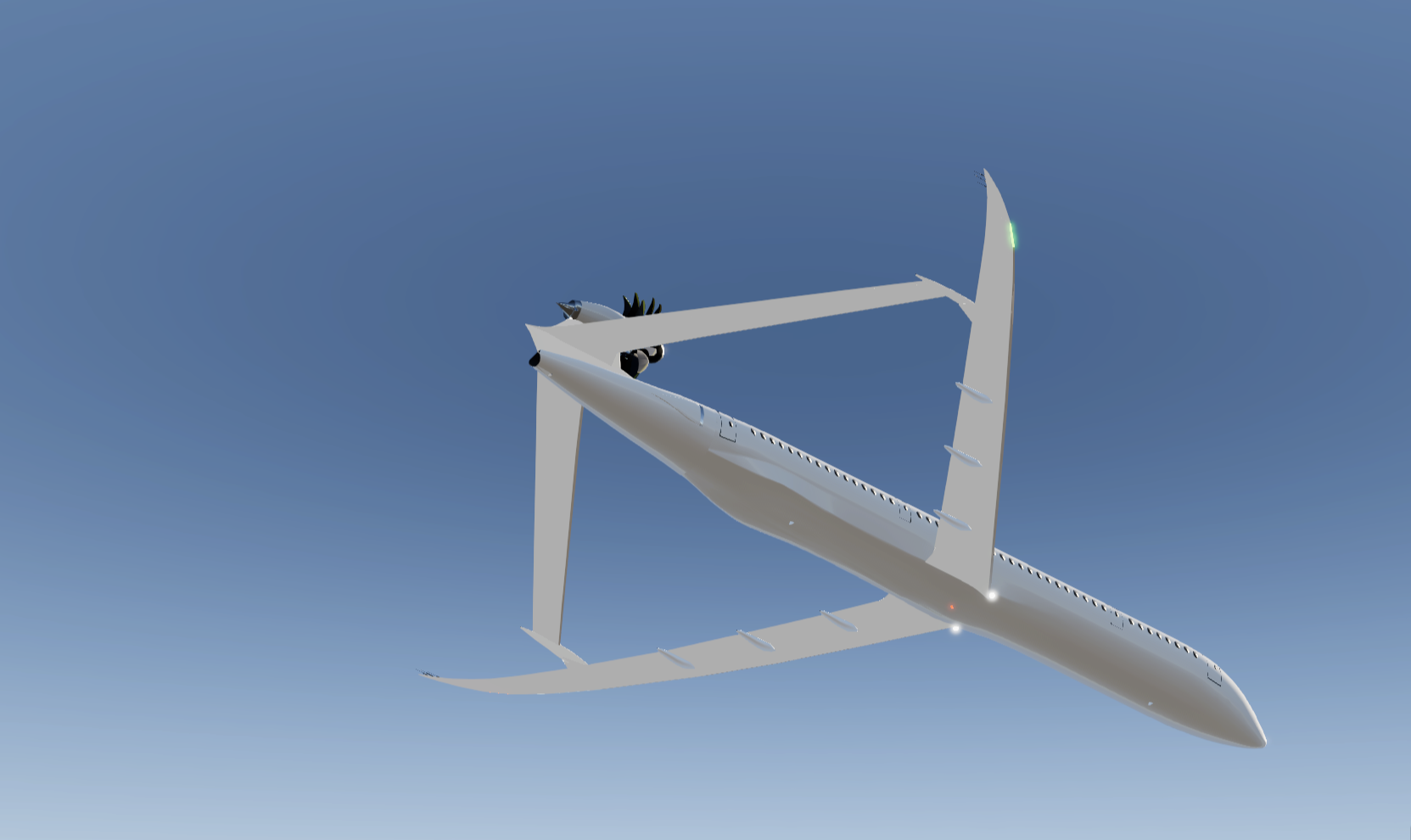
THE FUTURE FLIES ON ONE ENGINE
Our mission is to provide the aviation industry with hardware, software, and certification solutions required for variable propulsion aircraft.
This technology is the most promising pathway for reducing the environmental impact and operating costs of commercial aviation.
Variable Propulsion
Variable propulsion is a novel propulsion architecture for turbine-powered aircraft. Rather than two identical engines which operate continuously, variable propulsion utilizes a primary and secondary engine. The secondary engine provides critical redundancy, but shuts down upon reaching a safe altitude. The primary engine operates alone during certain phases of flight, greatly reducing operating costs and emissions.
Past research shows double-digit fuel burn and operating cost reductions compared to conventional twin-engine aircraft.
Why is this possible now?
Transport category airplanes are certified to a level of safety where any catastrophic failure has a probability of less than one in a billion (10^-9) per flight hour. Historically, this has been achieved using two identical engines with inflight shutdown (IFSD) rates on the order of 10^-5. However, modern engines now achieve IFSD rates below 10^-6. The remaining 10^-3 can be mitigated by restarting the secondary engine should the primary engine fail. Additionally, since the engines are no longer identical, they are less susceptible to common failure conditions.
ECONOMICS
Lower cost per available seat mile.
SUSTAINABILITY
Double-digit emissions reductions.
VIABILITY
Works with existing engines and energy sources.